
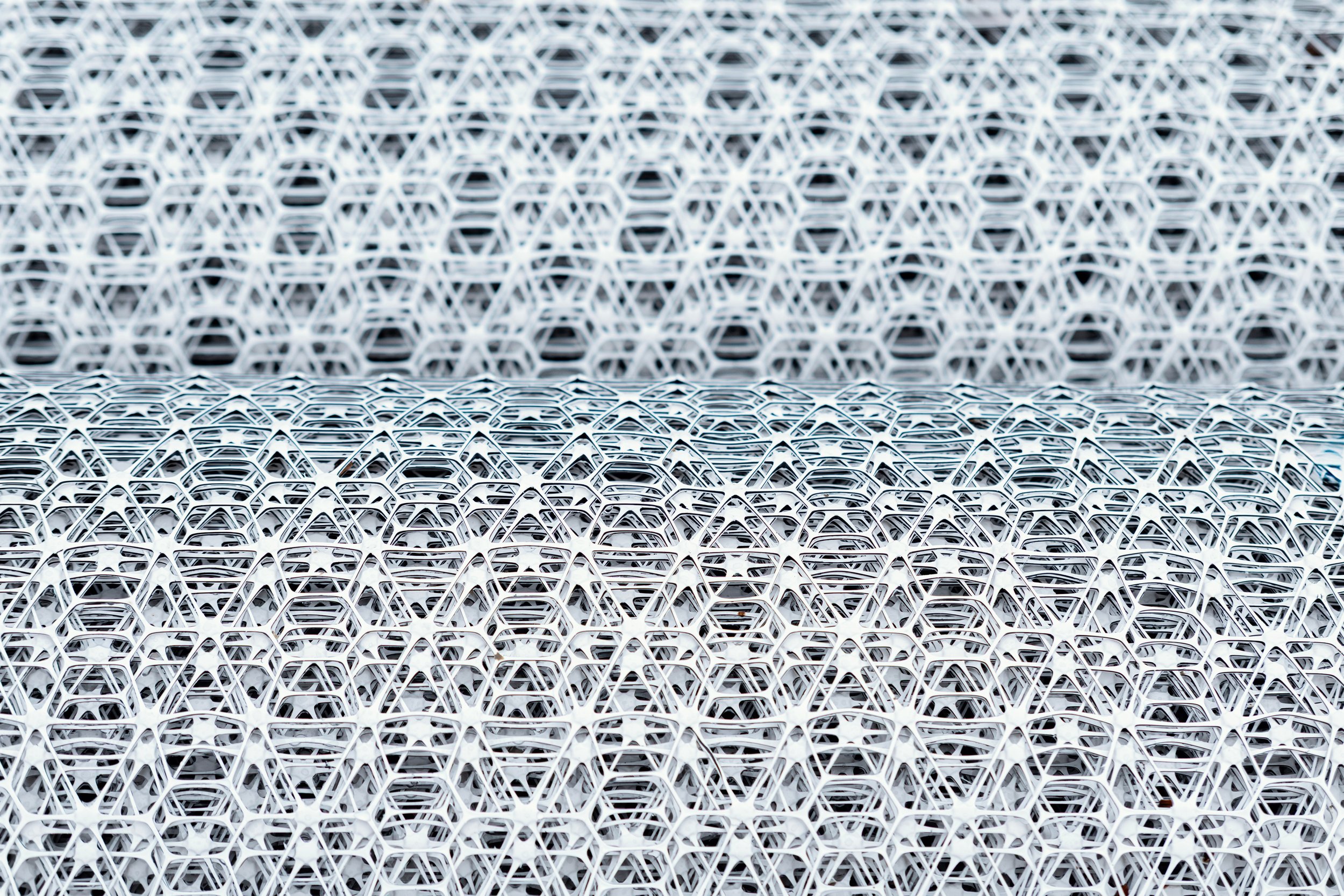
Cement Stabilization
Cement stabilization involves mixing Portland cement into soil. This approach requires mixing, equipment, and curing time and carries a high carbon footprint due to cement production. It provides permanent, rigid support ideal for heavy-duty applications. The process typically involves spreading cement powder over the soil, mixing it to a specific depth using specialized equipment, then compacting and allowing the mixture to cure. This creates a hardite-like layer that provides excellent vertical load capacity but can be prone to cracking in areas with significant soil movement or freeze-thaw cycles.
Geogrid Reinforcement
Geogrid reinforcement uses geosynthetic grids placed under aggregate materials. It's ideal for gravel driveways, patios, roads, and parking areas with fast installation and minimal labor. This method is more eco-friendly and offers flexible, long-lasting reinforcement. The polymer grid structure interlocks with aggregate particles, creating a mechanically stabilized layer that distributes loads laterally. Unlike cement stabilization, Geogrid remains flexible and can accommodate some soil movement without cracking—a significant advantage in Northern Ohio where freeze-thaw cycles are common.
Key Comparison Points
| Factor | Geogrid | Cement Stabilization |
|---|---|---|
| Installation | Fast installation with minimal labor | Requires mixing, equipment, and curing time |
| Weather Resistance | Flexible, adapts to freeze-thaw cycles | Rigid, can crack in extreme conditions |
| Load Distribution | Excellent lateral load distribution | Provides vertical support |
| Environmental Impact | Low carbon footprint, eco-friendly | High carbon footprint due to cement |
| Cost | Lower installation and material costs | Higher due to cement and labor |
When to Choose Each Method
Choose Geogrid For:
- Faster installation with no curing time
- Lower costs and reduced environmental impact
- Flexible applications like driveways, patios, and parking areas
- Projects requiring adaptability to soil movement
Choose Cement Stabilization For:
- Permanent, rigid support for heavy-duty applications
- Highways, airports, and industrial facilities
- Projects where maximum vertical load capacity is critical
Cost Considerations
While cement stabilization may seem like a straightforward solution, the total cost often exceeds Geogrid reinforcement when you factor in equipment rental, labor, curing time, and potential repairs from cracking. Geogrid installation is faster—often completed in a single day for residential projects—and requires no curing time, so you can proceed with the next phase immediately. For most residential and light commercial applications in Ohio, Geogrid provides better value and long-term performance.
The Bottom Line
Both methods have their place in construction. Cement stabilization makes sense for permanent infrastructure projects where rigidity is essential and budgets allow for the additional cost and complexity. For driveways, parking lots, patios, and most residential applications, Geogrid offers a more practical solution with faster installation, lower cost, and better adaptability to Ohio's challenging soil and weather conditions.
Need Help Choosing?
Contact our experts for a free consultation and DCP testing to determine the best solution for your project.